What is batching?
Batching means grouping similar tasks and doing them together. In social media, it means you write all your captions in one sitting, film several videos in one shoot or design a set of graphics at once. Then you schedule them to post over the following days or weeks.
The idea is simple. Switching between tasks wastes time and focus. Every time you set up lights, open a design app or get into a writing mood, there is a warm-up cost. Batching pays that cost once instead of every day.
Why batching matters
- Saves time. Setup happens once for many posts.
- Keeps you consistent. A full queue means you still post during busy or sick days.
- Improves quality. You can think more deeply when you stay in one kind of work for a few hours.
- Lowers stress. No more scrambling for an idea at 9 p.m.
- Frees your days. Outside your batch sessions, you can focus on replies, clients or the rest of your job.
Here is a comparison for one person who posts five times a week. Making each post on the day it goes out took far longer than doing the same work in two blocks.
Time to make five posts a week
| Hours | |
|---|---|
| Made each day | 7.5 h |
| Batched in two sessions | 4 h |
How to batch your social media content
- Plan topics first. Use your content pillars and calendar to list the posts you need for the next week or month.
- Group by task. Do all the writing in one block, then all the filming, then all the editing.
- Prepare your space. For video, set up lighting and props once and change outfits or angles between clips.
- Use templates. Reusable graphic and caption formats speed things up.
- Schedule everything. Load the finished posts into your scheduler with times and accounts.
- Leave room. Keep a few open slots for trends and news.
A sample batching week
- 1Monday
Brainstorm ten post ideas and pick seven.
- 2Tuesday
Write all seven captions.
- 3Wednesday
Film four short videos and take photos for three posts.
- 4Thursday
Edit the videos and design the graphics.
- 5Friday
Schedule the full week ahead and review last week's comments.
You don't need a full week. Many people do it all in one afternoon every Sunday or every other Friday. Others batch writing on one day and filming on another, because those tasks need different energy. Try a rhythm for a month, then adjust.
Protect the time. Put your batch sessions in your calendar like meetings, turn off notifications and tell your team you're heads down. A two-hour block with no interruptions often gets more done than a full day of stop-and-start work.
How to batch for several networks
Start with one core idea and make each network's version in the same session. A tip that becomes a 60-second video can also become a carousel, a short text post and a pin. Write the longest version first, then cut it down. A LinkedIn post can run to 3,000 characters, while Threads allows 500 and a standard X post 280, so the short versions need their own tight wording.
Batch media the same way. Export each image or video in every shape you need while the design file is open. Coming back later to resize one graphic costs more time than doing all the sizes at once.
Keep a simple tracker for each batch with the post, the network, the date, the media file and its status. When something goes wrong, such as a missing image or a wrong link, the tracker shows you which post to fix before it goes live.
Batching and bulk scheduling
Batching is about making content. Bulk scheduling is about loading it. Once a batch is finished, a bulk upload or a queue lets you place dozens of posts on the calendar in minutes instead of one at a time. Together, they turn a week of small daily tasks into two focused sessions. The scheduler also shows the batch as a whole, so you can spot two similar posts landing on the same day and move one.
Common mistakes
- Batching too far ahead, so posts feel stale or clash with news
- Batching posts and then ignoring the account, when comments still need replies
- Making every post in a batch look and sound the same
- Skipping a final check of dates, links and offers before scheduling
A week to a month ahead works for most people. Mix formats and angles inside each batch, and give the whole set one more read before it goes into the queue. Look for repeated openings, since a batch written in one sitting often starts every post the same way.
Tools that help
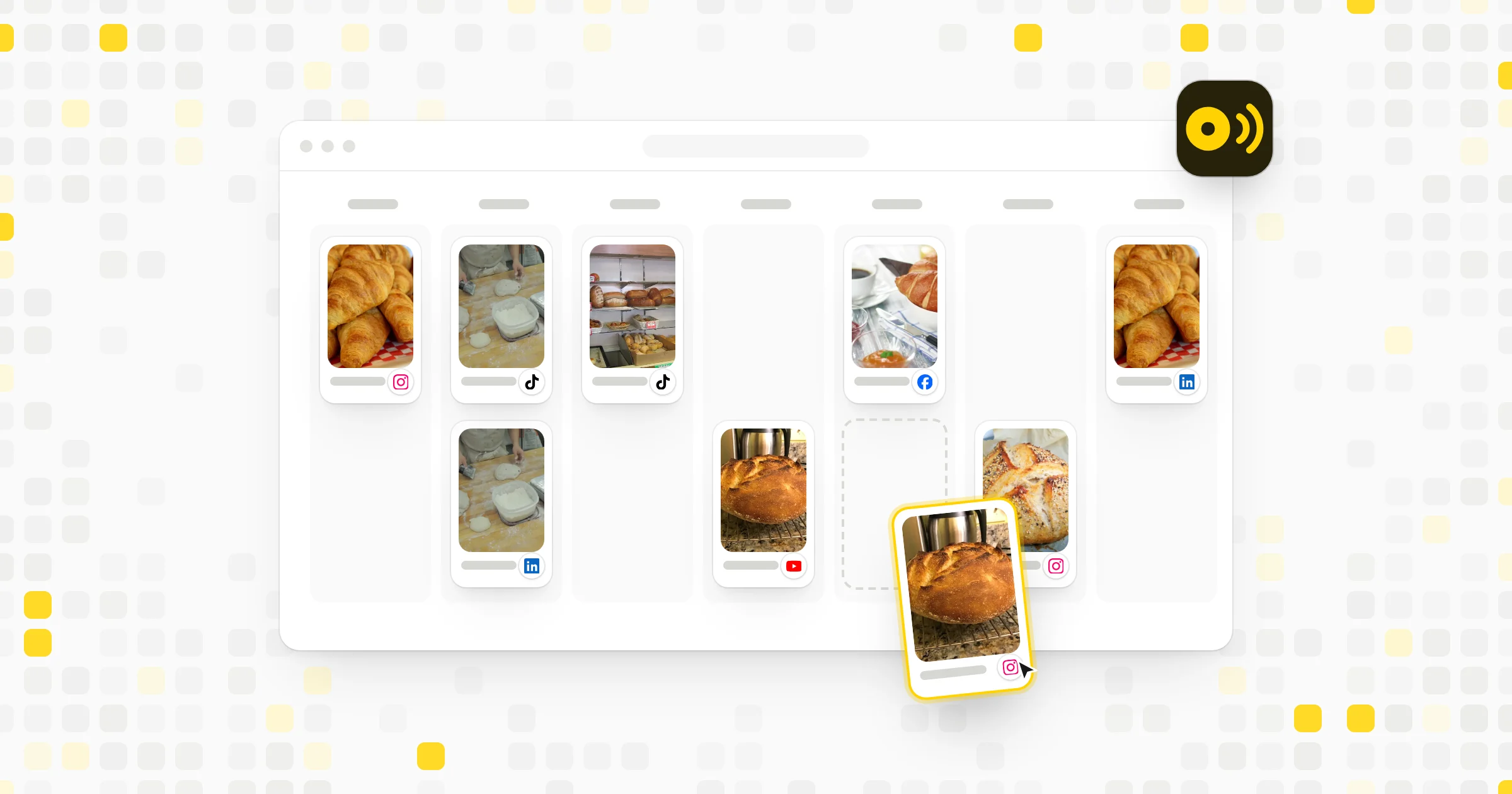
 Capybaroar SchedulerOur toolLoad a finished batch with bulk upload or a queue, and see the whole week on one calendar.Open
 NotionA workspace for planning post ideas and tracking each batch.Visit site
 CanvaA design tool with reusable templates for making many graphics at once.Visit site
 Compare tools15 Best Social Media Scheduling Tools, Compared (2026)
Related terms
- Content calendarA content calendar is a schedule of planned social media posts showing what will go out, on which channel, on which day and at what time.
- Bulk schedulingBulk scheduling is loading many social media posts into a scheduling tool at once, often from a spreadsheet, so they publish over days or weeks.
- Content pillarsContent pillars are the three to five core topics a brand or creator posts about again and again, giving the feed focus and making planning easier.
- QueueA queue is a line of posts waiting to be published in order, each one going out at the next open time slot you set in a scheduling tool.
- Social media schedulingSocial media scheduling is writing posts ahead of time and setting them to publish automatically at a chosen date and time.