What is social media scheduling?
Social media scheduling means you do the work of posting before the moment it goes live. You write the caption, add images or video, choose the accounts and set a date and time. When that time arrives, the post publishes on its own, whether you are in a meeting, asleep or on holiday.
You can schedule inside many social apps directly, or use a social media management tool to schedule across several apps at once. Either way, the post sits in a calendar or a queue until its time comes.
Why social media scheduling matters
- Consistency: posts go out on a steady rhythm, even on busy days.
- Better timing: you can post when your audience is online, even outside your working hours.
- Time saved: batching a week of posts in one sitting is faster than writing each one on the day.
- Fewer mistakes: you have time to proofread and get approval before anything goes live.
- A clear plan: a calendar view shows gaps and overlaps across all accounts.
How to schedule social media posts
- 1Plan
Pick topics and dates on the content calendar.
- 2Make
Write captions and create images or video in one batch.
- 3Fit
Adjust length, hashtags and media for each network.
- 4Set
Choose a time for each post or add it to the queue.
- 5Review
Get approval, check previews and fix any cut-off text.
- Plan topics on a content calendar. Mix your content pillars across the week so you do not post the same kind of thing twice in a row.
- Write and design in a batch. Set aside a block of time, such as a Monday morning, to make the whole week.
- Adjust each version for its app. Change the length, hashtags and image size so each post fits where it goes.
- Pick a time or use a queue. Set a date and time for each post, or drop it into a queue with set time slots.
- Get approval if your team needs it.
- Check the calendar before each week starts and again when big news breaks.
Fitting each post to its network
One of the easiest ways to slip is to write once and paste everywhere. Each network has its own length limit, and the gap between them is huge.
Characters allowed in one post or description
| Characters | |
|---|---|
| 63,206 | |
| YouTube description | 5,000 |
| 3,000 | |
| 2,200 | |
| TikTok | 2,200 |
| Discord | 2,000 |
| Google Business Profile | 1,500 |
| Threads | 500 |
| Pinterest description | 500 |
| Mastodon | 500 |
| Bluesky | 300 |
| X | 280 |
Limits used by Capybaroar's composer, November 2026.
A long Facebook post will not fit on Bluesky, which allows 300 characters, or X, which allows 280 on standard accounts. Threads and Pinterest descriptions sit at 500. Write your main idea first, then trim or expand it for each app. Previews in your scheduling tool help you catch a cut-off line before it goes out.
Calendar vs queue
A calendar is for posts with a set moment, like a launch at 9 a.m. on Tuesday. A queue is for evergreen posts you want spread out. You set the slots once, such as Monday, Wednesday and Friday at noon, and each new post drops into the next free slot. Many teams use both: fixed posts on the calendar, everything else in the queue.
Here is an example. A yoga studio puts class launches and holiday hours on fixed dates. Tips, student shout-outs and short videos go into a queue with five slots a week. When the owner has a burst of ideas, she adds ten posts to the queue in one sitting, and the studio's feed stays busy for two weeks.
What you can schedule
Most tools can schedule image posts, videos, carousels, link posts and text posts. Stories, Reels, Shorts and some special formats depend on what each platform allows outside its own app. Some tools also schedule the first comment, which is handy for links or extra hashtags. Bulk upload lets you add many posts at once from a spreadsheet.
How often to post depends on the network and on how much good content you can make. A short text app can handle several posts a day, while a long YouTube video might go up once a week. Start with a pace you can keep for a full month without rushing, then check your analytics. If engagement holds up, add a slot. If quality slips, drop one. Steady beats bursts.
To find your best times, look at when your followers are online in each app's insights, then test a few slots over several weeks. Keep the post type the same while you test the time, so you know the time made the difference.
Common mistakes
- Setting posts and forgetting them. If major news breaks, pause your schedule and check whether any post could seem out of touch.
- Treating scheduling as the whole job. Someone still needs to reply to comments once posts go live.
- Getting time zones wrong, especially when your audience lives somewhere else.
- Scheduling so far ahead that posts go stale, like a price that changed last week.
Tools that help
 Capybaroar SchedulerOur toolSchedule posts to 14 networks from one calendar, with a queue, bulk upload, first comment and previews.Open
- Best time to postOur toolOur free tool suggests posting times to test for each network.Open
- Character counterOur toolOur free counter checks your caption against each network's limit before you schedule it.Open
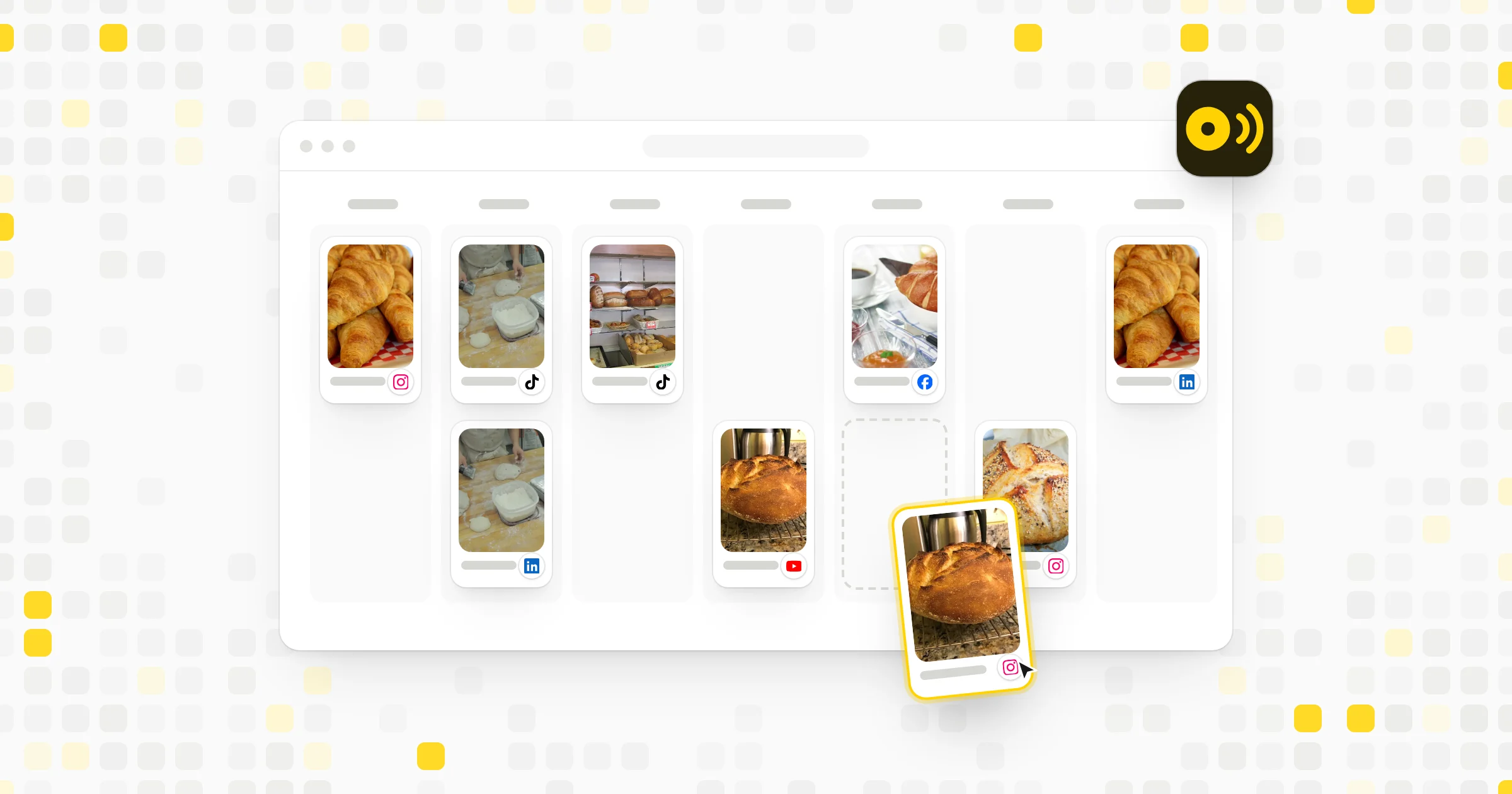 Compare tools15 Best Social Media Scheduling Tools, Compared (2026)
Related terms
- QueueA queue is a line of posts waiting to be published in order, each one going out at the next open time slot you set in a scheduling tool.
- Bulk schedulingBulk scheduling is loading many social media posts into a scheduling tool at once, often from a spreadsheet, so they publish over days or weeks.
- Content calendarA content calendar is a schedule of planned social media posts showing what will go out, on which channel, on which day and at what time.
- Best time to postThe best time to post is the day and hour when your own audience is most active and most likely to see and engage with your content.
- Social media management toolA social media management tool is software that lets you plan, schedule, publish, reply to and measure posts across many social accounts from one place.