What is a queue?
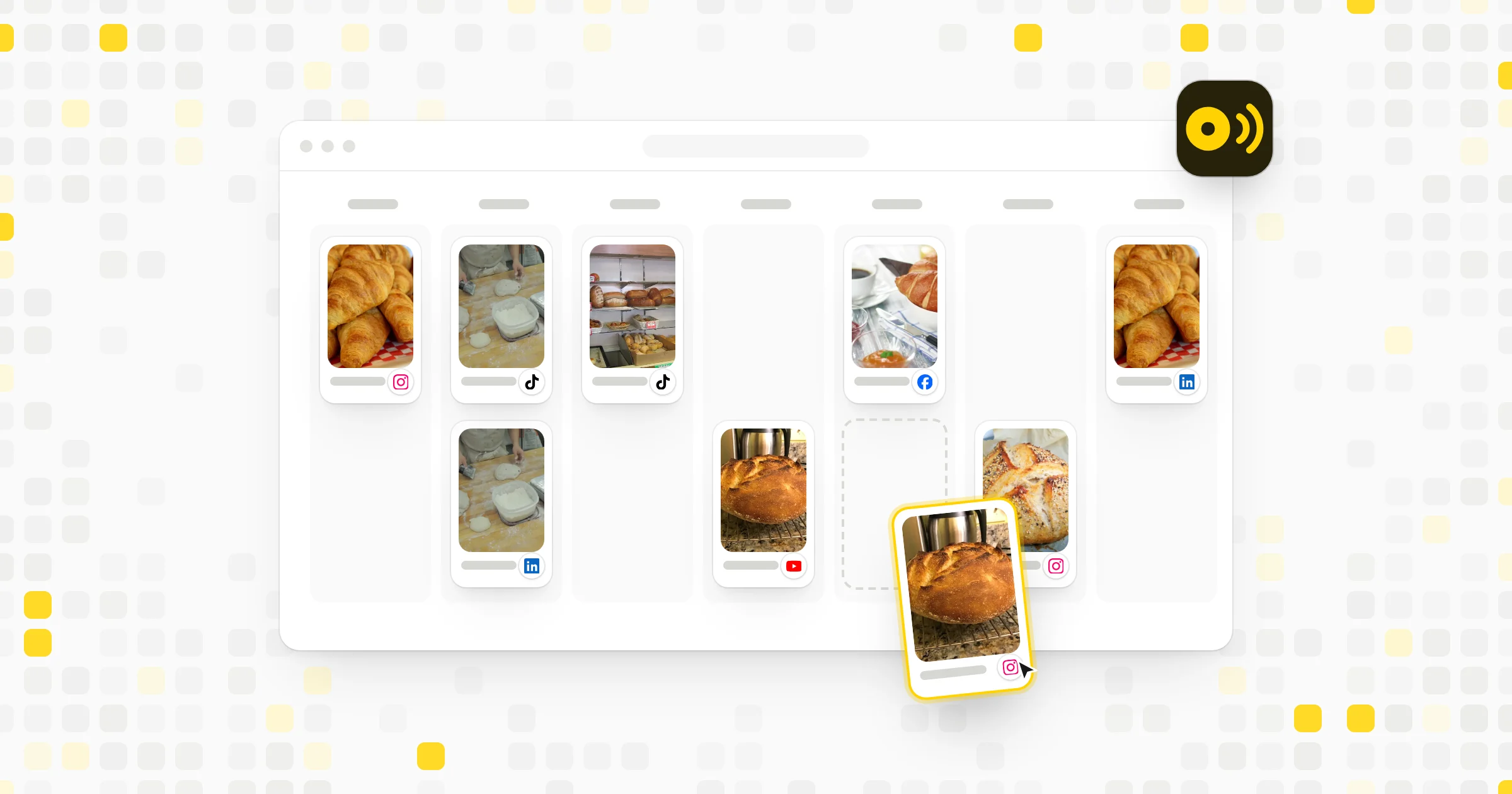
In social media tools, a queue is a list of posts lined up to go out one after another. You set regular time slots for each account, such as weekday mornings and evenings. Each post you add drops into the next free slot, and the tool publishes it when that time comes. You don't have to pick a date and time for every single post.
Think of it like a line at a ticket window. The slots are the window opening times, and the posts are the people waiting. Whoever is next in line goes when the window opens.
How a queue works
- 1Set slots
Choose regular posting times for each account.
- 2Add a post
Write it once and pick the accounts.
- 3Next free slot
The tool places it in the first open time.
- 4Publish
The post goes live when its slot arrives.
- You set time slots. For example, Monday to Friday at 8:30 and 17:00 for Instagram, and three times a day for X.
- You add a post to the queue. You write it once and choose which accounts it goes to.
- The tool places it in the next empty slot for each account.
- When the slot arrives, the post goes live.
- The queue moves forward, and the next post waits for its turn.
Most tools let you drag posts to reorder them, push an urgent post to the front or pause the whole queue if news breaks. If you change a slot time, every queued post moves with it.
Queue vs scheduling a set time
Scheduling a post for a set date and time is best when timing matters, like a launch, a live event or a holiday greeting. A queue is best for steady, everyday content where the exact hour matters less than showing up often. Many teams use both. Time-sensitive posts get fixed times, and everything else flows through the queue.
| Queue | Set time | |
|---|---|---|
| You pick the exact hour | – | |
| Good for everyday posts | Works, but slower | |
| Good for launches and events | – | |
| Moves when you change slot times | – | |
| Keeps posts evenly spaced | Only if you plan it |
Why use a queue
- You keep a steady posting rhythm without thinking about each slot.
- You can write many posts in one sitting and let them roll out over days.
- Gaps on busy weeks are less likely, since the queue keeps going.
- You can change slot times once and have every queued post follow.
- A team can add posts from different people while one schedule keeps them spaced out.
How to set up a good queue, step by step
- Pick slot times from your data. Check your analytics for the hours your followers are online, and start there.
- Set slots for each network on its own. X and Threads can take more slots a day than LinkedIn or Pinterest.
- Match slots to what you can fill. Ten slots a week with five posts leaves gaps. Start smaller and add slots later.
- Fill at least a week ahead. A buffer covers sick days, trips and busy launches.
- Mix post types. Spread tips, questions, stories and offers so followers don't see the same kind of post several times in a row.
- Review the queue each week. Read the next few days of posts and check that dates, prices and links are still right.
For example, a bookshop might set Instagram slots at 9:00 on weekdays and 11:00 on Saturdays. On Sunday evening, someone writes six posts in an hour: two staff picks, a quote, a question, an event reminder and a photo of the new window display. The queue spaces them across the week.
How to tell if your queue works
Look at reach and engagement for each slot over a few weeks. If one slot keeps doing poorly, move it to a different hour or drop it. Also check how often the queue runs dry. If it empties every Thursday, you either need fewer slots or a longer writing session.
It also helps to look at how far ahead the queue runs. A queue that is always two days from empty puts stress on the team. A queue that runs three months ahead may hold posts that go stale before they go out.
Common mistakes
- Setting and forgetting. A queue runs on its own, which is both its strength and its risk.
- Letting old posts go out. A promotion that already ended, or a cheerful post during a serious news event, can hurt your brand.
- Too many slots. Filling slots with weak posts trains followers to scroll past you.
- Identical copy on every network. Adjust the text and size for each app, even when the idea is the same.
Pause the queue when something big happens in the news or in your business, and read it again before you start it.
Tools that help
 Capybaroar SchedulerOur toolSet queue time slots for each channel, add posts and let them go out in order.Open
- Capybaroar AnalyticsOur toolSee your best times to post, so you can place queue slots where your audience is.Open
- Best time to postOur toolOur free guide to choosing posting hours for each network.Open
 Compare tools15 Best Social Media Scheduling Tools, Compared (2026)
Related terms
- Social media schedulingSocial media scheduling is writing posts ahead of time and setting them to publish automatically at a chosen date and time.
- Bulk schedulingBulk scheduling is loading many social media posts into a scheduling tool at once, often from a spreadsheet, so they publish over days or weeks.
- Content calendarA content calendar is a schedule of planned social media posts showing what will go out, on which channel, on which day and at what time.
- Posting frequencyPosting frequency is how often you publish new content on a social media account, such as several times a day, once a day or a few times a week.
- Auto-postingAuto-posting is publishing social media content automatically at a set time or after a trigger, without someone pressing post by hand.