What is evergreen content?
Evergreen content gets its name from evergreen trees, which keep their leaves all year. It covers topics that don't go out of date quickly. A guide on how to clean leather boots will be just as useful next year. A post about this week's news will not.
Examples of evergreen content include:
- How-to guides and tutorials
- Answers to common customer questions
- Glossaries and beginner explainers
- Checklists and templates
- Stories about your brand's values or history
- Before and after examples of your work
How evergreen content works
Most social posts get nearly all their views in the first day or two, then fade. Timely posts follow that curve sharply. Evergreen posts fade too, but because the topic stays useful, you can share them again and again. Each new share starts a fresh curve with people who missed it, and new followers who joined since the last time.
On your website and on search-friendly networks like YouTube and Pinterest, evergreen pieces can keep pulling views for months, since people keep searching the same questions.
Views per month after posting
| Views | |
|---|---|
| Month 1 | 2,400 |
| 2 | 1,900 |
| 3 | 1,800 |
| 4 | 2,100 |
| 5 | 1,900 |
| 6 | 1,850 |
| 7 | 2,200 |
| 8 | 2,000 |
The chart above compares the monthly views of one evergreen how-to video. It never has a huge spike, but it keeps bringing in steady views month after month, with small bumps when it is shared again.
Why evergreen content matters
Evergreen posts save time. You make one strong piece and get value from it many times. They also help new followers catch up. Someone who followed you last week has never seen your best post from last spring.
They also give you a safety net. On weeks when you are busy, sick or short on ideas, a library of evergreen posts keeps your calendar full without a rushed post you will regret.
How to build and reuse evergreen content, step by step
- 1Find
Spot older posts that still earn saves and clicks.
- 2Refresh
New hook, new cover, updated details.
- 3Schedule
Add it to your queue with space since the last share.
- 4Review
Check how it did and note when to share it next.
- Find your winners. Look through your analytics for older posts that still get saves, shares or clicks.
- Build a library. Keep a list of your strongest timeless posts, with notes on when each last went out.
- Refresh before reposting. Write a new hook, swap the cover image or turn a single photo into a carousel.
- Check the details. Update prices, links, dates and any facts that have changed.
- Space them out. Leave enough time between repeats that most followers won't remember the last one.
- Mix them in. Blend evergreen posts with timely ones so your feed still feels current.
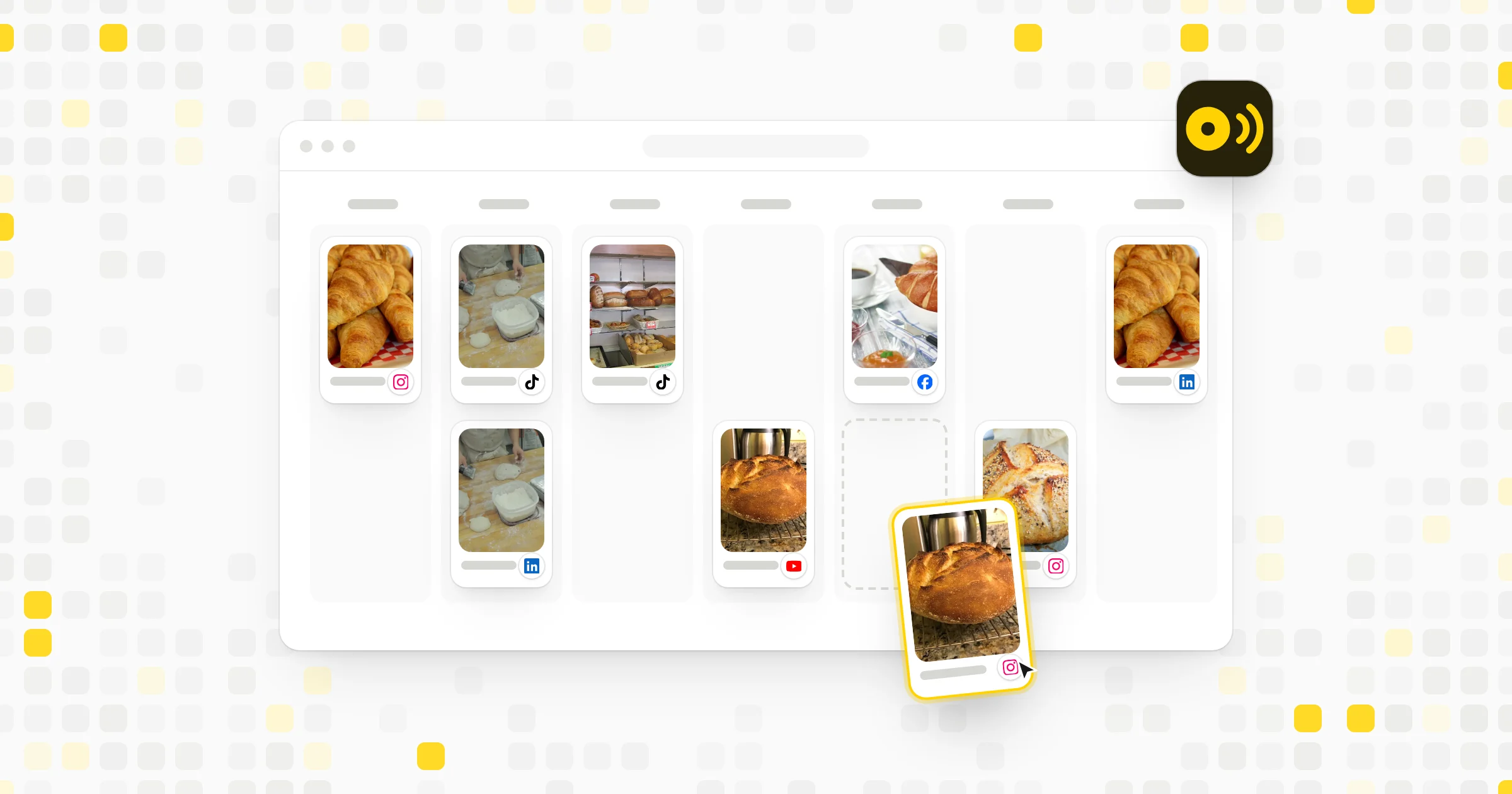
Many teams keep evergreen posts in a queue that fills open slots in their calendar.
Here is an example. A dog groomer posts a carousel on how to brush a double coat. It does well, so she saves it to her library. Four months later she reposts it with a new first slide that says "Shedding season is here." Six months after that she turns the same tips into a short video. One idea has now become three posts, each reaching people who missed the others.
Evergreen vs timely content
Timely content ties to a trend, a holiday or a news event. It can spike fast and then disappear. Evergreen content grows slowly and lasts. A healthy content plan uses both. Timely posts grab attention now, and evergreen posts keep working in the background.
A useful trick is to pair them. When a trend touches your topic, post the timely take and link to your evergreen guide for people who want more.
Evergreen content on different networks
Search-led networks reward evergreen content the most, since people find posts by typing a question. That includes YouTube, Pinterest and, more and more, TikTok and Instagram search. Fast feeds like X, Threads and Bluesky move quickly, so evergreen posts there work best when reshared with a fresh angle. On LinkedIn, practical how-to posts and document posts can be reposted with a new opening line.
Common mistakes
- Reposting the exact same caption over and over, which looks lazy to loyal followers.
- Old details. An expired discount code or dead link confuses people and makes you look careless.
- Only evergreen. A feed with nothing timely can feel stale.
- Calling everything evergreen. If a post mentions "this year" or a price, it will age.
Before you share an evergreen post again, read it as if you were a new follower seeing it for the first time.
Tools that help
 Capybaroar SchedulerOur toolKeep evergreen posts in a queue and schedule them across your channels from one calendar.Open
 NotionA workspace for keeping a library of evergreen posts with notes on when each went out.Visit site
 CanvaA design tool for giving an old post a fresh cover or turning it into a carousel.Visit site
 Compare tools15 Best Social Media Scheduling Tools, Compared (2026)
Related terms
- Content calendarA content calendar is a schedule of planned social media posts showing what will go out, on which channel, on which day and at what time.
- QueueA queue is a line of posts waiting to be published in order, each one going out at the next open time slot you set in a scheduling tool.
- Content pillarsContent pillars are the three to five core topics a brand or creator posts about again and again, giving the feed focus and making planning easier.
- RepostA repost is when you share someone else's post with your own followers, either with a built-in repost button or by posting it again with credit.
- BatchingBatching is creating many pieces of social content in one focused session, such as writing a week of posts or filming several videos in one day.