What is the best time to post?
The best time to post is when the people you want to reach are on the app and ready to pay attention. Posting then gives your content a better start. Early views and comments help the algorithm decide whether to show a post to more people.
There is no single best time for everyone. A coffee shop's followers may scroll at breakfast. A gaming creator's fans may be online late at night. B2B audiences on LinkedIn often use it during the work week. Your best time comes from your own audience, and it can differ from one network to the next even for the same account.
Why posting time matters
Most feeds rank posts by interest, but timing still plays a part. If you post while your followers are asleep, your post competes with everything else that was shared by the time they wake up. A post that lands when they are active has a better shot at those first reactions.
That said, timing is a smaller factor than the post itself. A great post at an average time will usually beat a weak post at the perfect time. Think of good timing as a small boost on top of good content.
How to find your best time to post
- Check your analytics. Many platforms show when your followers are online, by hour and day.
- Look at your past posts. Sort them by reach or engagement and note when the top ones went out.
- Think about time zones. If your audience lives across several regions, find the overlap or post more than once.
- Test different slots. Try a few time windows for several weeks each and compare results.
- Recheck every few months. Habits change with seasons and school terms.
What your data might show
Here is an example from one account. It posted at different times for a month and averaged the engagement rate for each slot. The evening slot came out ahead. A different account could see the opposite.
Average engagement rate by followers for one account over a month
| Engagement rate | |
|---|---|
| 7 a.m. | 2.4% |
| 10 a.m. | 2.9% |
| 1 p.m. | 3.1% |
| 4 p.m. | 2.7% |
| 7 p.m. | 4.2% |
| 10 p.m. | 3.0% |
Days matter as well as hours. Some accounts see weekdays and weekends behave very differently. A recipe account might do best on Sunday, when people plan meals. A business tips account might do best midweek. Group your posts by day and compare averages the same way.
Same account, same month
| Engagement rate | |
|---|---|
| Mon | 2.6% |
| Tue | 3.0% |
| Wed | 3.4% |
| Thu | 3.1% |
| Fri | 2.5% |
| Sat | 2.2% |
| Sun | 3.8% |
How to test posting times
- 1Pick three or four slots
Choose windows your analytics say are busy.
- 2Rotate for a few weeks
Post in each slot several times with a mix of formats.
- 3Compare rates
Average the engagement rate or reach for each slot.
- 4Set your queue
Make the winners your regular times, and recheck each season.
Keep everything else as steady as you can while you test. If you post your best format in one slot and your weakest in another, the result tells you about formats and says little about times. Rotate formats across slots so each time gets a fair mix. Write down each post's slot, format and result in a simple sheet. After a few weeks, sort by slot and the pattern is usually easy to see.
Timing also works hand in hand with frequency. Timing is when you post. Frequency is how often. Both matter, and they work together. Posting at a strong time every day may beat posting once a week at the perfect time. Find a steady pace you can keep, then fit those posts into your best time windows.
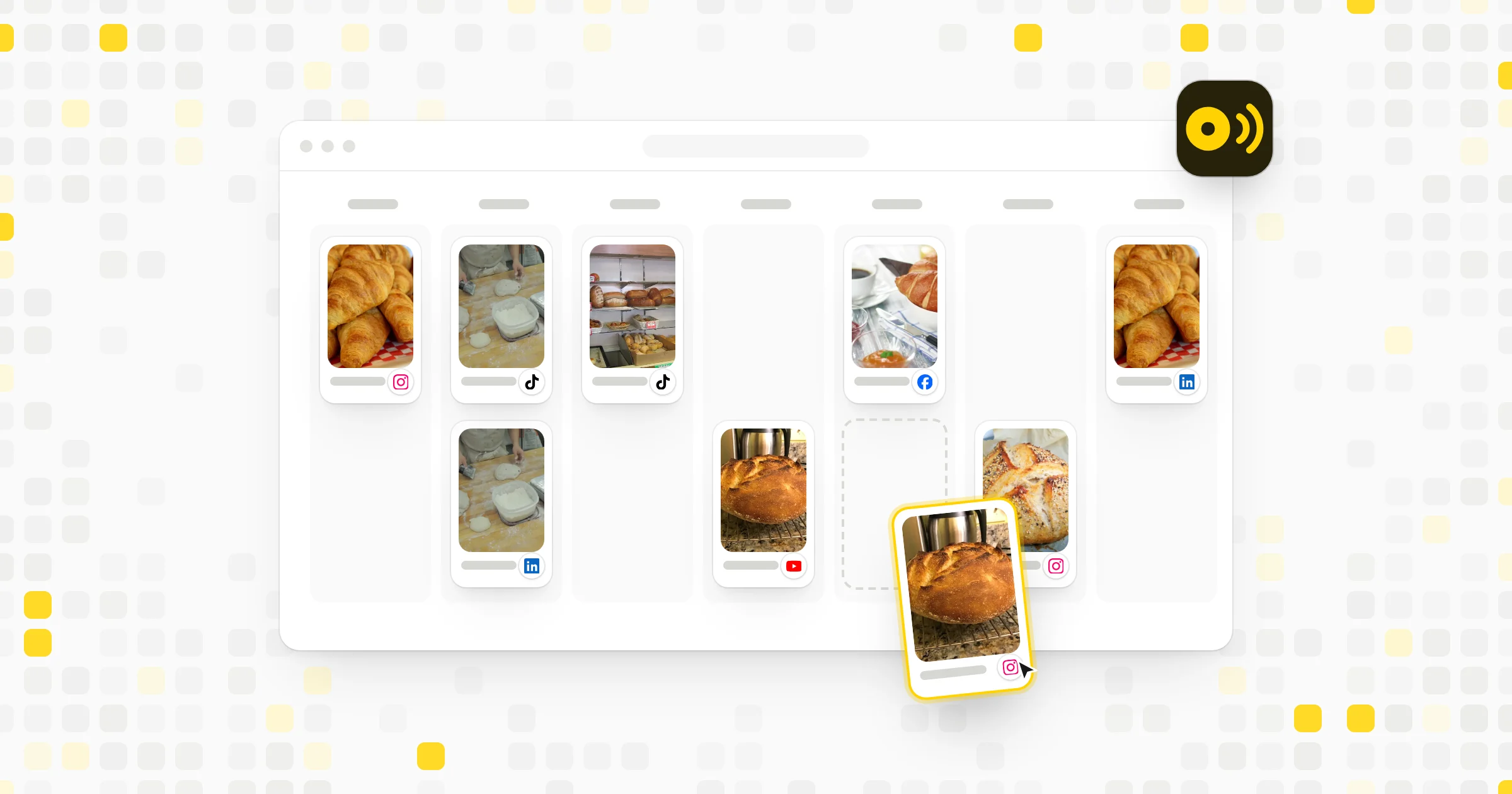
A scheduler helps here. Set up your best slots as a queue, and each new post drops into the next good time without you watching the clock.
How timing differs across networks
Each network has its own rhythm. Professional networks tend to be busiest during working hours, when people check them between meetings. Entertainment apps often peak in the evening and on weekends, when people have time to scroll. Chat-based places such as Discord servers follow the habits of each community, which may be late at night.
How long a post stays visible changes the stakes too. On a fast text feed, a post can drop out of view within hours, so timing matters more. On search-driven places such as Pinterest and YouTube, people may find a post weeks later, so the hour you publish matters less than the title and keywords.
Common mistakes
- Copying generic "best time" charts made from other people's accounts
- Posting at exactly the top of the hour, when many scheduled posts go out at once
- Judging a time slot from one post
- Forgetting that your own time zone may differ from your audience's
- Using the same time on every network, when each audience keeps its own habits
Tools that help
 Capybaroar AnalyticsOur toolSee your best times to post for each channel, based on your own results.Open
- Capybaroar SchedulerOur toolTurn your best times into a queue so new posts land in the right slots.Open
- Best time to postOur toolOur free tool suggests starting times to test for each network.Open
 Compare tools15 Best Social Media Scheduling Tools, Compared (2026)
Related terms
- Posting frequencyPosting frequency is how often you publish new content on a social media account, such as several times a day, once a day or a few times a week.
- AnalyticsAnalytics are the data and reports that show how your social media posts and accounts perform, such as reach, engagement and clicks.
- Social media schedulingSocial media scheduling is writing posts ahead of time and setting them to publish automatically at a chosen date and time.
- QueueA queue is a line of posts waiting to be published in order, each one going out at the next open time slot you set in a scheduling tool.
- ReachReach is the number of unique people who saw your content at least once, counting each person only one time.